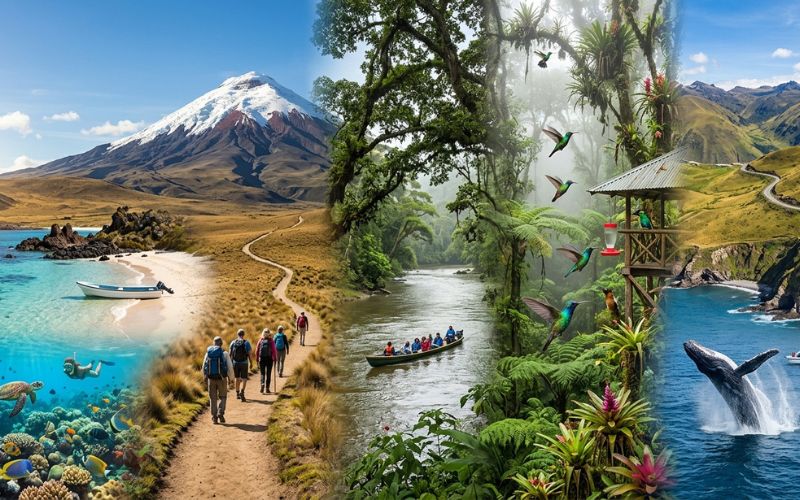
Ecuador packs four different worlds into one small country. You can walk through cloud forests, hike high volcanoes, paddle down Amazon rivers, or swim with marine life in the Galápagos.
This guide covers top attractions, real costs, travel safety, and simple planning advice.
Ecuador Quick Facts
- Capital: Quito (2,850 meters / 9,350 feet elevation)
- Currency: US Dollar ($ USD)
- Language: Spanish (Kichwa is also spoken)
- Time Zone: UTC-5 (Mainland), UTC-6 (Galápagos)
- Plug Type: Type A and B (North American standard)
Quick Answer: What are the best things to do in Ecuador?
The top five experiences are visiting the Galápagos Islands, exploring historic Quito, hiking Cotopaxi National Park, adventuring in Baños, and touring the Amazon Rainforest. You need 10 to 14 days to see the mainland highlights alongside the Galápagos.
Ecuador at a Glance
Ecuador is easy to navigate once you know the basics.
- Language: Spanish is official. Basic phrases help outside big hotels.
- Time Zone: Mainland Ecuador uses Eastern Standard Time (EST) all year.
- Visa Basics: US, Canadian, EU, UK, and Australian citizens get 90 days visa-free. Passports must be valid for six months.
- Safety Overview: Most visits are safe. Use registered taxis at night and guard your bags. Check US State Department or UK FCDO advice before traveling.
| Region | Best For | Days Needed | Budget | Difficulty |
|---|---|---|---|---|
| Galápagos Islands | Wildlife, snorkeling, diving | 5–8 Days | High | Easy to Moderate |
| Andes Highlands | Volcanoes, markets, culture | 5–7 Days | Low to Mid | Moderate to Hard |
| Amazon Rainforest | Jungle lodges, river trips | 3–5 Days | Mid to High | Easy to Moderate |
| Pacific Coast | Beaches, surfing, whales | 3–5 Days | Low to Mid | Easy |
Map of Ecuador’s Four Travel Regions
Ecuador is split into four distinct zones, each offering different weather and activities.
Andes Highlands
The mountain spine running down the center of the country. Features snow-capped volcanoes, colonial towns, high lakes, and traditional craft markets.
Galápagos Islands
Volcanic islands 600 miles off the coast. Home to rare wildlife found nowhere else on Earth.
Amazon Rainforest
The jungle basin filling eastern Ecuador. Visitors stay in eco-lodges and travel by river canoe.
Pacific Coast
The western shoreline with sandy beaches, fishing towns, fresh seafood, and seasonal whale watching.
25+ Best Things to Do in Ecuador
Galápagos Islands Experiences
- Giant Tortoise Sanctuaries: Walk with wild tortoises in the Santa Cruz Highlands.
- Snorkel with Marine Life: Swim at Kicker Rock near San Cristóbal to spot sharks and sea lions.
- Tortuga Bay: See marine iguanas on white sand beaches near Puerto Ayora.
- Las Grietas: Swim inside a clear ocean-filled volcanic canyon.
- Charles Darwin Research Station: Learn about island conservation from the Charles Darwin Foundation.
- Island Hopping: Take public speedboats between Santa Cruz, San Cristóbal, and Isabela.
- Wildlife Photography: Capture close photos of blue-footed boobies and frigatebirds.
- Kayaking: Paddle quiet mangrove bays to spot reef sharks and sea turtles.
- Scuba Diving: Take day trips to Gordon Rocks to see hammerhead sharks.
Quito Attractions
- Historic Center: Walk through South America’s best-preserved UNESCO colonial zone.
- Basílica del Voto Nacional: Climb high church towers for views across the city.
- La Compañía de Jesús: Tour a historic church lined with gold leaf walls.
- Plaza Grande: Watch local life in the city’s main historic square.
- El Panecillo: Visit the huge aluminum Virgin Mary statue overlooking Quito.
- TelefériQo: Ride a cable car up Pichincha Volcano to 4,050 meters (13,300 feet).
- Street Food: Try fried empanadas, potato soups, and roasted corn.
Cotopaxi National Park
Cotopaxi is one of the world’s highest active volcanoes. Follow official Cotopaxi National Park guidelines for high climbs.
- Refuge Hike: Trek up to the José Rivas Refuge at 4,864 meters (15,958 feet).
- Mountain Biking: Ride down dirt trails from the refuge to the valley floor.
- Horseback Riding: Ride across high mountain plains surrounding the peak.
- Limpiopungo Lake: Walk a flat loop path around the lake to see wild birds.
Quilotoa Loop
A network of mountain trails connecting remote Andean villages.
- Crater Lake Viewpoint: Look down into Quilotoa Lake’s deep emerald waters.
- Day Hike Down: Walk inside the volcanic crater to rent kayaks at the water’s edge.
- Multi-Day Hiking: Trek three days between Sigchos, Isinlivi, Chugchilán, and Quilotoa.
- Village Stays: Enjoy cozy mountain hostels with warm fires and home-cooked meals.
Baños Adventure Activities
Located in a green valley between the Andes and the Amazon. It is Ecuador’s adventure hub.
- Swing at the End of the World: Ride the famous swing at La Casa del Árbol over a canyon rim.
- Waterfalls Route: Bike along the highway past dozens of roaring mountain waterfalls.
- Pailón del Diablo: Walk steep stone steps right up to a massive crashing waterfall.
- Zipline and Rafting: Fly over canyon gorges or raft the Pastaza River rapids.
- Canyoning: Rappel down waterfalls using ropes and harnesses with trained guides.
- Thermal Baths: Soak in hot pools heated by nearby Tungurahua Volcano.
Mindo Cloud Forest
A misty forest two hours northwest of Quito, packed with birds and wildlife.
- Birdwatching: Spot hundreds of colorful species, including toucans and hummingbirds.
- Butterfly Garden: Walk among native butterflies inside open enclosures.
- Chocolate Tour: See how cacao beans turn into organic dark chocolate.
- Ziplining and Cable Cars: Fly across the forest canopy on zip lines or ride a cable car (tarabita).
- Waterfall Walks: Hike gentle trails to swim in cool mountain streams.
Otavalo & Indigenous Culture
Famous for hosting one of South America’s largest craft markets.
- Plaza de Ponchos: Browse woven blankets, alpaca sweaters, and crafts. Saturday is the biggest market day.
- Peguche Waterfall: Walk through quiet eucalyptus forests to a sacred waterfall.
- Textile Workshops: Visit nearby Agato village to watch traditional wooden loom weaving.
Cuenca
A peaceful southern city listed as a UNESCO World Heritage site.
- Colonial Streets: Walk through historical neighborhoods filled with stone streets and red roofs.
- New Cathedral: Visit the Cathedral of the Immaculate Conception with its blue domes.
- Panama Hat Workshops: Learn how traditional straw hats are hand-woven in Ecuador.
- Tomebamba River: Stroll along grassy river banks lined with historic homes.
Amazon Rainforest
Ecuador gives quick access to deep jungle habitats.
- Canoe Trips: Travel down forest rivers in motorized canoes to spot monkeys and birds.
- Canopy Walks: Climb high towers to see toucans and sloths in the treetops.
- Night Walks: Join guides after dark to find forest frogs, insects, and spiders.
- Indigenous Communities: Visit local villages to learn about traditional plant medicine.
Pacific Coast
Features sandy beaches, fishing towns, and ocean life.
- Puerto López: Base yourself here for ocean trips inside Machalilla National Park.
- Whale Watching: Take boat trips between June and October to spot humpback whales.
- Isla de la Plata: Visit this island to see blue-footed boobies on low-cost day trips.
- Montañita: Enjoy popular surf breaks, beach cafes, and lively nightlife.
- Beaches and Surfing: Relax on soft sand beaches at Olón, Ayampe, Mompiche, or Salinas.
Hidden Gems
- Cajas National Park (El Cajas): Hike high mountain trails and glacial lakes near Cuenca. Best for 1 day. Cost: Free entry; $40–$60 for tours.
- Chimborazo Refuge: Visit Ecuador’s highest peak, the furthest point from the Earth’s center. Best for 1 day. Cost: $40–$70 for transport.
- Ingapirca: Tour the country’s largest Inca ruins, including the Temple of the Sun. Best for half a day. Cost: $6 entry.
- Chocó Andino (Mashpi Reserve): Explore a protected cloud forest reserve. Best for 2–3 days. Cost: High ($300+ per night).
- Nariz del Diablo (Devil’s Nose): View famous mountain train tracks near Alausí. Best for 1 day. Check local operators for current train access.
- Papallacta Hot Springs: Relax in volcanic thermal pools near Quito. Best for 1 day. Cost: $10 entry.
Best Places to Visit in Ecuador by Traveler Type
Matching your travel style to the right region saves time and money.
- First-Time Visitors: Choose Quito, Cotopaxi, Baños, and Santa Cruz Island for a mix of top hits.
- Families: Mindo and Baños offer easy nature walks, butterfly gardens, and cable cars.
- Couples: Cuenca and Papallacta offer romantic street walks, cozy haciendas, and hot springs.
- Solo Travelers & Backpackers: The Quilotoa Loop, Baños, and Ayampe offer easy hostel connections.
- Luxury Travelers: Book Yasuní eco-lodges or private Galápagos yacht charters.
- Adventure Seekers: Visit Baños and Cotopaxi for biking, rafting, canyoning, and volcano climbs.
- Wildlife Lovers: Head to the Galápagos, Cuyabeno Reserve, and Mindo Cloud Forest.
- Food Lovers: Travel through Quito, Guayaquil, and Manabí for soups, meats, and fresh seafood.
| Traveler Type | Top Destinations | Primary Activities | Expected Budget |
|---|---|---|---|
| First-Time Visitors | Quito, Cotopaxi, Baños, Galápagos | City tours, volcano hikes, wildlife walks | Mid-Range |
| Families | Galápagos, Mindo, Baños | Snorkeling, butterfly gardens, waterfall walks | Mid to High |
| Couples | Cuenca, Papallacta, Galápagos | Hot springs, town walks, scenic boat trips | Mid to High |
| Solo Travelers | Quito, Baños, Montañita | Hostel stays, group tours, surfing | Low to Mid |
| Backpackers | Quilotoa Loop, Baños, Ayampe | Village hikes, local market meals, surf stays | Budget |
| Luxury Travelers | Galápagos Yacht, Yasuní Lodges | Private yacht charters, luxury eco-lodges | High |
| Adventure Seekers | Baños, Chimborazo, Cotopaxi | Downhill biking, volcano climbing, rafting | Mid-Range |
| Wildlife Lovers | Galápagos, Cuyabeno, Mindo | Birdwatching, forest walks, marine snorkeling | Mid to High |
| Food Lovers | Quito, Guayaquil, Manabí Coast | Market tastings, fresh ceviche, chocolate tours | Low to Mid |
Regional Comparison Guide
| Region | Best Experience | Budget | Wildlife | Adventure | Culture | Relaxation |
|---|---|---|---|---|---|---|
| Galápagos | Marine Wildlife | High | Exceptional | Moderate | Low | High |
| Andes | Volcanoes & Culture | Low–Mid | Moderate | High | Exceptional | Moderate |
| Amazon | Jungle Exploration | Mid–High | High | High | High | Low |
| Coast | Beaches & Seafood | Low–Mid | Moderate | Moderate | Low | Exceptional |
Sample Ecuador Itineraries
5-Day Itinerary: The Andes Express
- Day 1: Arrive in Quito. Explore the Historic Center and Basílica.
- Day 2: Day trip to Cotopaxi National Park. Hike to the refuge.
- Day 3: Travel to Baños. Visit Pailón del Diablo waterfall.
- Day 4: Enjoy Baños adventure activities. Return to Quito.
- Day 5: Ride the TelefériQo cable car before your flight home.
- Budget Estimate: $400–$700 per person.
7-Day Itinerary: Volcanoes & Cloud Forest
- Day 1–2: Explore Quito’s old town and take the cable car.
- Day 3–4: Visit Mindo Cloud Forest for birds, chocolate, and waterfalls.
- Day 5: Travel to Quilotoa Crater Lake. Hike the crater rim.
- Day 6: Hike or bike in Cotopaxi National Park.
- Day 7: Return to Quito for departure.
- Budget Estimate: $600–$1,000 per person.
10-Day Itinerary: Mainland Highlights & Galápagos Intro
- Day 1–3: Visit Quito, Cotopaxi National Park, and Baños.
- Day 4: Fly to Santa Cruz Island in the Galápagos. Visit the Darwin Station.
- Day 5: Explore Tortuga Bay and the Highland tortoise sanctuaries.
- Day 6: Take a boat tour to an uninhabited island like Bartolomé.
- Day 7: Take a ferry to Isabela Island.
- Day 8: Snorkel at Los Túneles to see sharks and rays.
- Day 9: Ferry back to Santa Cruz.
- Day 10: Fly back to the mainland for your flight home.
- Budget Estimate: $1,800–$3,000 per person.
14-Day Itinerary: The Ultimate Ecuador Experience
- Day 1–3 (Andes): Tour Quito, Otavalo Market, and Cotopaxi.
- Day 4–7 (Amazon): Fly to Coca for a 4-day Cuyabeno or Yasuní jungle lodge tour.
- Day 8–12 (Galápagos): Fly to San Cristóbal Island. Snorkel Kicker Rock and explore beaches.
- Day 13–14 (Coast): Fly to Guayaquil and visit Puerto López for seafood and beach views before flying home.
- Budget Estimate: $3,000–$5,500 per person.
Galápagos Reality Check (Costs & Planning)
Galápagos visits require specific park fees paid in cash upon arrival.
- Return Flights from Mainland: $250–$500 per person.
- National Park Entrance Fee: $200 per adult ($100 per child).
- Transit Control Card (Ingala): $20 per person.
- Isabela Island Pier Fee: $10 per person.
- Day Boat Tours: $120–$250 per person per day.
- Hotels: $50–$100 per night for budget rooms; $200–$500+ for luxury resorts.
| Feature | Land-Based Travel | Cruise Travel |
|---|---|---|
| Cost | Lower ($150–$300 / day) | Higher ($400–$1,000+ / day) |
| Flexibility | High (choose daily options) | Fixed (follow set routes) |
| Nightly Sleep | Hotel bed on land | Cabin bed on a boat |
| Remote Islands | Limited to day-boat range | Full Access to distant islands |
| Best For | Families & independent travelers | Couples & dedicated nature fans |
Amazon Lodges Comparison
| Feature | Cuyabeno Wildlife Reserve | Yasuní National Park |
|---|---|---|
| Best For | Budget travelers & wildlife counts | High luxury & deep primary forest |
| Access | Bus + 2-hour canoe from Lago Agrio | Flight to Coca + 2-hour canoe ride |
| Cost | $300–$600 for 4 days (All-inclusive) | $1,000–$2,500+ for 4 days (All-inclusive) |
| Comfort | Rustic to mid-range lodges | High-end luxury lodges with AC |
| Wildlife | Great views along flooded rivers | Exceptional deep-jungle canopy towers |
| Season | Dec to Mar (Drier trails) | Year-round (High water for canoes) |
Best Time to Visit Ecuador & Monthly Weather Guide
Ecuador stays temperate year-round, but rainfall changes by region.
- Andes: June to September is dry and sunny. October to May brings rainy afternoons.
- Galápagos: December to May is warm and sunny. June to November brings cooler water and rich marine life.
- Amazon: December to March is drier for walking. April to July brings high water for canoe trips.
- Coast: December to May is warm and sunny. June to November is cooler, bringing humpback whales to Machalilla National Park and Los Frailes Beach.
| Month | Rain Risk | Top Wildlife Events | Best Region | Key Activities |
|---|---|---|---|---|
| Jan | High (Coast) | Sea turtles nest in Galápagos | Galápagos | Snorkeling, beaches |
| Feb | High (Coast) | Marine iguanas show bright colors | Galápagos | Carnival water fights |
| Mar | Medium | Land iguanas hatch | Coast | Surfing, beach trips |
| Apr | High (Amazon) | Albatross arrive on Española Island | Galápagos | Birdwatching |
| May | Medium | Sea lion pups play in shallow bays | Galápagos | Island hopping |
| Jun | Low (Andes) | Humpback whales arrive at coast | Andes & Coast | Volcano hiking, whale watching |
| Jul | Low (Andes) | Whales breach near Puerto López | Andes | High-altitude trekking |
| Aug | Low (Andes) | Blue-footed boobies nest | Andes | Mountain biking, markets |
| Sep | Low (Andes) | Sea lion pups born across islands | Galápagos | Scuba diving with sharks |
| Oct | Medium | Fur seal mating season | Galápagos | Photography tours |
| Nov | Medium | Giant tortoise eggs hatch | Andes | Day of the Dead food tours |
| Dec | High (Coast) | Green sea turtles begin mating | Galápagos | Holiday city tours |
Festivals & Cultural Experiences
- Carnival (Feb / Mar): Celebrated nationwide (especially Ambato and Guaranda) with parades, music, and water fights.
- Inti Raymi (June 21–24): Indigenous Sun Festival featuring traditional dancing near Otavalo and Cayambe.
- Day of the Dead (Nov 2): Families visit cemeteries to share colada morada (purple fruit drink) and guaguas de pan (sweet bread).
- Cuenca Foundation Days (Nov 3): Street concerts, fireworks, and artisan craft markets.
- Quito Foundation Days (Dec 1–6): Go-kart races, concerts, and party buses (chivas).
| Event | Date | Location | What to Expect |
|---|---|---|---|
| Carnival | Feb / Mar | Nationwide (Guaranda) | Water fights, street parades |
| Inti Raymi | June 21–24 | Northern Andes (Otavalo) | Sun dances, traditional dress |
| Day of the Dead | Nov 2 | Nationwide | Special foods, cemetery visits |
| Cuenca Days | Nov 3 | Cuenca | Craft fairs, fireworks, concerts |
| Quito Days | Dec 1–6 | Quito | Go-kart races, party buses |
Food You Should Try in Ecuador
Andes Region
- Locro de Papa ($3–$5): Warm potato soup with cheese and avocado.
- Hornado ($4–$7): Slow-roasted pork served with potato cakes (llapingachos).
- Llapingachos ($3–$5): Pan-fried potato cakes filled with cheese.
- Cuy ($15–$25): Traditional roasted guinea pig.
Pacific Coast & Galápagos
- Encebollado ($3–$6): Popular warm tuna and yucca soup served with onions.
- Ceviche ($5–$12): Fresh fish or shrimp cured in lime juice, served cold.
Amazon & Sweet Treats
- Dark Chocolate ($2–$5): Fine cacao bars from top brands like Pacari or Kallari.
- Tropical Fruits ($1–$3): Fresh fruits like passion fruit (maracuyá) and soursop (guanábana).
Transportation Guide
- Domestic Flights: LATAM and Avianca run daily flights. Quito to Galápagos costs $250–$500; mainland routes cost $40–$100.
- Intercity Buses: Buses link almost every city. Costs run about $1.50 to $2.00 per hour of travel time.
- Taxis & Rideshare: City rides cost $2–$5. Yellow taxis must use meters (taxímetro). Uber works in Quito, Guayaquil, and Cuenca.
- Rental Cars: Driving works well along the mountain highway. Rates run $35–$70 per day.
| Transport Mode | Best For | Typical Cost | Speed & Convenience |
|---|---|---|---|
| Domestic Flight | Long routes (Quito to Galápagos) | $40 – $500 | Very Fast |
| Intercity Bus | Low-cost travel between towns | $1.50 per hour | Slow |
| Rental Car | Road trips along mountain highways | $35 – $70 / day | Moderate |
| City Taxi / Uber | Short city trips | $2 – $5 per ride | Fast |
| Island Speedboat | Transfers between islands | $30 – $35 / trip | Moderate (Bumpy) |
Budget Breakdown
Backpacker Budget: $30 – $50 per day
Hostel dorms ($10–$18), market meals ($3–$5), public buses, self-guided walks.
Mid-Range Budget: $70 – $150 per day
Boutique hotels ($40–$80), sit-down restaurants ($10–$20), guided day tours, city taxis.
Luxury Budget: $250+ per day
Historic haciendas ($200+), fine dining ($40+), private guides, Galápagos cruises.
| Expense Category | Backpacker (Daily) | Mid-Range (Daily) | Luxury (Daily) |
|---|---|---|---|
| Lodging | $10 – $18 | $40 – $80 | $150+ |
| Food & Drink | $10 – $15 | $25 – $40 | $70+ |
| Activities | $5 – $15 | $20 – $50 | $100+ |
| Transport | $3 – $7 | $15 – $30 | $50+ |
| Total Daily Cost | $30 – $55 | $100 – $200 | $370+ |
Safety Tips for Visiting Ecuador in 2026
- Use Rideshares: Take Uber or Cabify at night instead of hailing street taxis.
- Guard Belongings: Keep phones in zipped pockets in crowded areas. Never hang bags on chair backs.
- Use Indoor ATMs: Withdraw cash inside banks or shopping centers.
- Altitude Care: Quito sits high up. Rest on your first day, drink extra water, and delay major climbs until day 3.
- Emergency Number: Call 911 for all emergency services. Check health advice on the CDC travel pages.
Common Mistakes First-Time Visitors Make
- Rushing the Schedule: Mountain travel is slow. Stick to two or three regions for a 10-day trip.
- Forgetting Galápagos Cash Fees: Always budget for the $200 park entrance fee and $20 transit card.
- Visiting Otavalo on Weekdays: The main full street market happens only on Saturdays.
- Packing Only Warm-Weather Clothes: Cold nights in the Andes require warm fleeces and pants.
- Booking Amazon Lodges Late: Reserve Cuyabeno or Yasuní lodges months ahead.
Practical Travel Tips
- SIM Cards: Buy a Claro or Movistar SIM card ($5 plus data) or get an eSIM before leaving home.
- Plugs: Uses standard 110V Type A and B plugs (same as North America).
- Cash Needs: Carry small cash bills ($1, $5, $10). Vendors rarely have change for $20 or $50 notes.
- Tipping: Leave 10% in sit-down restaurants and spare change at small stalls.
- Drinking Water: Stick to bottled water or use a water bottle with a filter.
- Public Restrooms: Carry tissue paper and spare coins ($0.25) for public restroom fees.
Final Thoughts: How to Choose the Right Ecuador Experience
- Best First Trip: Quito + Cotopaxi + Baños + Santa Cruz Island.
- Best Wildlife Trip: 5-day Galápagos stay + 4-day Yasuní Amazon lodge.
- Best Adventure Trip: Quilotoa Loop hike + Cotopaxi mountain biking + Baños rafting.
- Best Budget Trip: Andes intercity buses + coastal hostel stays + market meals.
- Best Luxury Itinerary: Historic haciendas + Yasuní eco-lodge + Galápagos yacht cruise.
Select two or three regions, give your body time to adapt to the elevation, and enjoy your trip!
Frequently Asked Questions
Is Ecuador safe for solo female travelers?
Yes. Use rideshare apps at night, stay in social hostels, and keep your valuables secure in crowds.
Can you visit Ecuador without speaking Spanish?
Yes. Tourist operators speak English, but learning basic Spanish phrases helps when ordering food or taking taxis.
Should I fly into Quito or Guayaquil?
Fly into Quito (UIO) for mountains and history. Fly into Guayaquil (GYE) for beaches or faster Galápagos flights.
How much cash should I carry in Ecuador?
Carry $30 to $50 per day in small bills. Credit cards work at large hotels, but small vendors only take cash.
What should I pack for Ecuador?
Pack layers. Bring light shorts for the coast, rain gear for the jungle, and warm fleece layers for the Andes.
Is altitude sickness common in Ecuador?
Yes. Rest for your first 24 to 48 hours in Quito, drink water, and avoid heavy exercise right away.
You May Be Interested In:
Things to Do in Dripping Springs: 25+ Best Places to Visit, Wineries & Fun Activities
Things to Do in Cusco: How to Plan the Perfect Experience for Every Traveler (2026 Guide)
Disclaimer:
This article is for informational and educational purposes only. Travel rules, prices, and conditions may change, so always verify details with official sources before making plans. Some images may be AI-generated for illustration. All copyrights, trademarks, and brand names belong to their respective owners.